
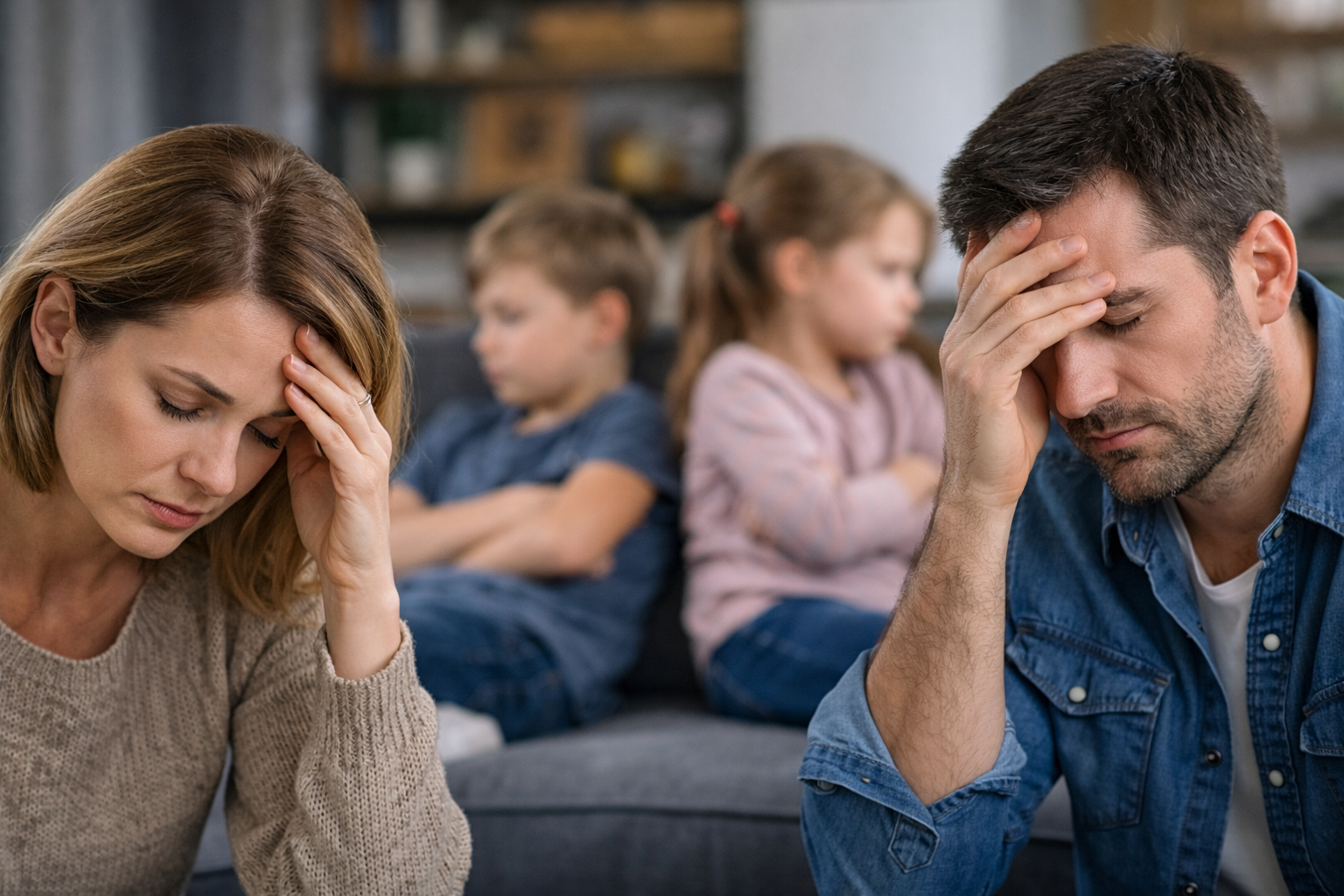
Have you ever sat with your family and still felt something was missing? No fights. No big problems. Yet somehow, the peace just isn’t there. This is how stress works — it doesn’t always come loudly. It quietly changes the feeling of a home.
What Stress Really Looks Like at Home
Stress is not always visible. It doesn’t always show up as anger or arguments. Sometimes, it appears as silence, short replies, or emotional distance.
Often, one person feels it first—but slowly, it spreads across the whole family.
Imagine this: someone comes home already tired and stressed. During the day, small misunderstandings happen over calls or messages. Nothing serious—but they stay in the mind.
The stress builds quietly.
When that person finally speaks, the emotions come out stronger than expected. The reaction feels bigger than the situation. Words become harsher, and tone becomes heavier.
For a calm person, small mistakes are easy to forgive. But for someone under stress, even a small issue can feel overwhelming. The realization may come later—but by then, others have already been hurt.
A Simple Real-Life Example
Think about a father who comes home after a long, stressful day at work. He is already mentally tired. His child tries to talk to him excitedly, but he responds with a short reply or irritation. The child feels ignored. The partner notices the tension and becomes upset.
Now, a small moment has turned into emotional distance.
No one intended to hurt anyone—but stress created a chain reaction.
This is how stress slowly affects family happiness—not through big problems, but through repeated small moments.
Signs Stress Is Affecting Your Family
Sometimes, stress doesn’t need to be explained—it can be felt in the way a home changes.
Everyone starts becoming quiet at home. Conversations feel forced or slowly disappear, and family members begin avoiding each other.
People often look for reasons to stay away from home. They spend more time outside or keep themselves busy just to avoid the uncomfortable environment.
Even when everyone is at home, there is no real connection. Each person stays busy on their mobile phone, TV, or other distractions, without caring about what is happening around them.
Simple conversations quickly turn into arguments. Small topics lead to irritation, misunderstandings, or fights.
There is a clear emotional distance. Family members live together, but they no longer feel connected.
Why Families Feel More Stressed Today
Life has become faster and more demanding. Work pressure, financial worries, and constant digital distractions leave little space to relax.
Parents feel tired, children feel unheard, and meaningful conversations become rare.
When communication decreases, misunderstandings increase—and that is where emotional distance begins.
How Stress Affects Relationships
Stress changes how people interact with each other. Patience becomes weaker, and small issues start feeling bigger than they really are.
Children are especially sensitive. They may not understand stress fully, but they can feel tension in the environment. This affects their behavior, emotions, and confidence.
Over time, this can impact how they express emotions and build relationships in the future.
When Attention Gets Divided
In busy homes, attention is not always equal.
One child may receive more focus, while another quietly feels ignored. This is often unintentional, but the emotional impact is real.
Even small moments of attention can shape a child’s self-worth and emotional health.
If this continues, it can also create distance and conflict between siblings.
Breaking the Stress Cycle
- Spend a few minutes daily without phones
- Listen fully when someone speaks
- Pause before reacting
- Create simple and peaceful routines
- Take short breaks to relax
- Spend time with your spouse and talk calmly
- Play with your children and truly listen to them
These small habits can slowly rebuild connection and emotional balance.
How AI Can Help Reduce Family Stress
Technology is not just about convenience anymore—it can also support mental well-being when used correctly.
For example, a busy parent can use reminder apps to manage daily tasks instead of keeping everything in mind. This reduces mental pressure and prevents frustration.
AI-powered apps can also play calming music instantly after a stressful day, helping to shift the mood of the entire home.
Sleep-focused apps help improve rest, which directly affects mood and patience levels. A well-rested person reacts differently than a stressed and tired one.
Some tools even offer guided breathing exercises or short meditation sessions that can be done in just a few minutes.
- Playing calming music instantly
- Helping improve sleep quality
- Providing guided breathing or meditation
- Managing schedules and reminders
These small supports reduce mental load and create more space for peace, patience, and connection at home.
Frequently Asked Questions
Can stress really damage family relationships?
Yes. When stress continues over time, it reduces communication, increases misunderstandings, and creates emotional distance between family members.
How can I reduce stress at home quickly?
Start with small steps like spending device-free time together, listening without interrupting, and creating simple daily routines.
Do children feel their parents’ stress?
Yes. Children are very sensitive to emotional environments. Even if they don’t understand stress, they can feel tension and react to it.
Conclusion
A peaceful home does not require perfection.
It needs attention, calm moments, and small efforts every day.
Most families are not unhappy—they are just tired.
Stress slowly reduces the joy of everyday life, but with awareness and small changes, happiness can return step by step.
'; ?>